
MK3 Focus RS Tuning Guide — Stage 1 & Stage 2 | Wayside Performance

The MK3 Focus RS is the most capable performance Focus ever built — and one of the finest hot hatches of its generation.
Produced from 2016 to 2018 at Ford's Saarlouis plant in Germany, it pairs a 2.3-litre turbocharged EcoBoost engine with a Getrag six-speed manual gearbox and GKN's trick torque-vectoring all-wheel-drive system.
It was the first RS-badged Focus to use AWD since the Escort Cosworth, and it shows — this is a car that fundamentally changed what people expected from a performance hatchback.
The 2.3-litre EcoBoost is derived from the same Mazda L-series architecture as the 2.0 found in the Focus ST, but with a longer stroke, an open-deck aluminium block with cast-iron cylinder liners, and a completely different cylinder head — rumoured to have been developed with input from Cosworth, though Ford has never officially confirmed it.
The head uses an upgraded alloy rated for higher operating temperatures and features larger exhaust valves (30mm vs 28mm on the 2.0), a more aggressive cam profile, and an integrated exhaust manifold feeding a twin-scroll turbocharger with a 10-blade compressor wheel.
The result is 345bhp and 440Nm — rising to 470Nm for up to 15 seconds via a transient overboost function — and a specific output of 150bhp per litre.
This guide covers the two most popular stages of tune for the standard-turbo RS, with our recommended hardware at each level. Every remap is a custom dyno calibration carried out on our in-house rolling road — never a generic flash file.
Stock PerformanceFactory baseline — 345bhp / 440Nm (470Nm overboost)
From the factory the RS makes 345bhp and 324ft/lb of torque (440Nm), with a transient overboost function that pushes torque to 347ft/lb (470Nm) for up to 15 seconds under hard acceleration.
Ford's claimed 0–62mph time is 4.7 seconds, with a top speed of 165mph — serious numbers for a hatchback that weighs 1,569kg.
One of the first things we noticed on the dyno is that the factory power delivery isn't as linear as you'd expect. Boost is delivered incrementally, peaking higher up the rev range than it should, which leaves a noticeable gap in the midrange.
The car feels quick in the upper reaches of the rev range, but it doesn't have that consistent, progressive shove from low down that you want from a properly calibrated turbo car.
This is one of the biggest gains from a Stage 1 remap — filling in that midrange and giving you a properly flat torque curve.
The stock intercooler is adequate for standard power in cool conditions, but the 2.3 EcoBoost runs hot — noticeably hotter than the 2.0 in the ST250. On a warm day or after a few hard laps, intake air temperatures climb quickly and the ECU starts pulling timing to protect itself. This is a fundamental characteristic of the engine that becomes important to manage as you add power.
The AWD SystemGKN Twinster — torque vectoring without a differential
The RS's all-wheel-drive system is genuinely special and worth understanding if you own one. Developed by GKN, it uses a "Twinster" rear drive unit that replaces the conventional rear differential entirely with twin electronically-controlled clutch packs.
There is no differential in this car — torque distribution is managed entirely by hydraulics and software.
The first clutch pack controls how much torque reaches the rear axle — up to 70% of the engine's output. The second pack then decides how that torque is split between the left and right rear wheels, with the ability to send 100% to a single wheel.
The system updates 500 times per second, constantly reading steering angle, yaw rate, throttle position and wheel speed to decide where power needs to go.
What makes it feel so different to other AWD hot hatches is the rear overspeeding.
The rear wheels are geared to rotate approximately 2% faster than the fronts. This means the rear of the car is constantly trying to overtake the front — giving the RS a rear-drive feel through corners that you simply don't get from a conventional Haldex system.
In curves, the car turns in sharper and responds more immediately to steering inputs. It's the reason the RS felt like nothing else in the segment when it launched, and it's still unmatched by most rivals.
The system operates across four drive modes — Normal, Sport, Track and Drift — each with its own torque control profile.
In Drift mode, the software allows significantly more slip angle at the rear before intervening, making controlled oversteer accessible without disabling the safety systems entirely.
It's a party trick, but it also demonstrates just how much engineering went into this drivetrain.
Stage 1 — 370–380bhpRemap only — no hardware required
Stage 1 is a remap only — no hardware changes are required, though we recommend an induction kit to complement the software.
With careful calibration of boost pressure, ignition timing, cam phasing and fuelling, we extract 370–380bhp and 395–415ft/lb from the standard turbo and exhaust.
The biggest improvement isn't the peak numbers — it's what happens in the midrange.
The factory calibration leaves a lot of power on the table between 2,500 and 4,500rpm, and our Stage 1 map fills this in completely. You get a properly progressive, linear power delivery with consistent shove from low down right through to the redline.
The car feels transformed, the throttle response is sharper, the turbo spools earlier, and the overboost function is integrated more aggressively into the main torque curve rather than sitting as a brief spike.
Crucially, our Stage 1 calibration includes active temperature protection. The 2.3 EcoBoost is thermally sensitive and we've built in safety strategies that monitor intake air temperatures, oil temperatures and exhaust gas temperatures in real time.
If any of these approach unsafe levels — during extended track use or on a particularly hot day — the software progressively reduces power until conditions improve.
This means you get maximum performance when the engine is happy, and automatic protection when it isn't. We could run more boost and more timing, but not reliably and not consistently on a standard cooling setup.
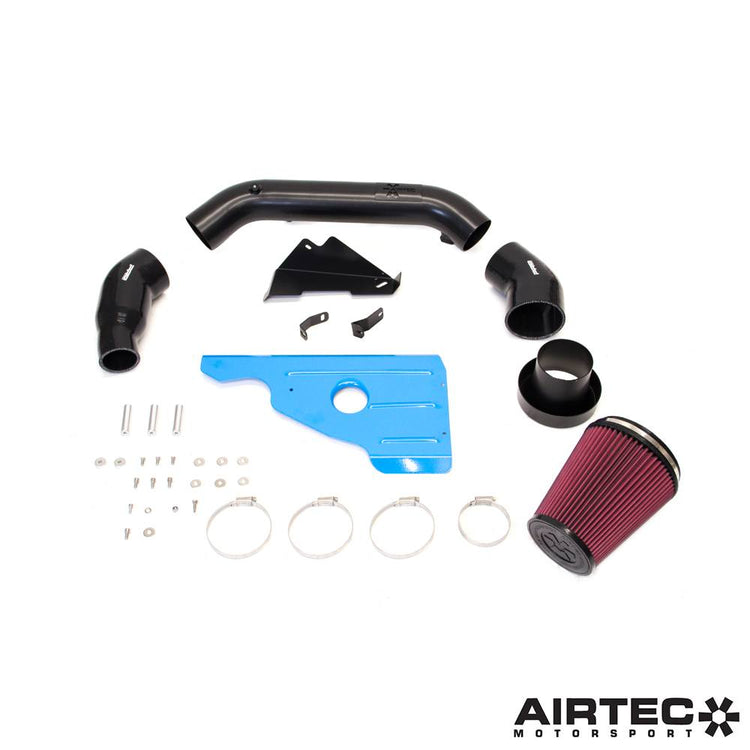
- Performance induction kit — improved airflow and intake sound
- 99 RON fuel — Shell V-Power or Tesco Momentum
Stage 2 — 420–435bhpIntake + intercooler + turbo-back exhaust required
Stage 2 is where the RS really comes alive. With the breathing restrictions removed — upgraded intake, larger intercooler and a full turbo-back exhaust — we can push the standard twin-scroll turbo much harder and extract 420–435bhp and 420–430ft/lb. That's a genuine 75–90bhp over stock, and it transforms the car from fast to genuinely rapid.
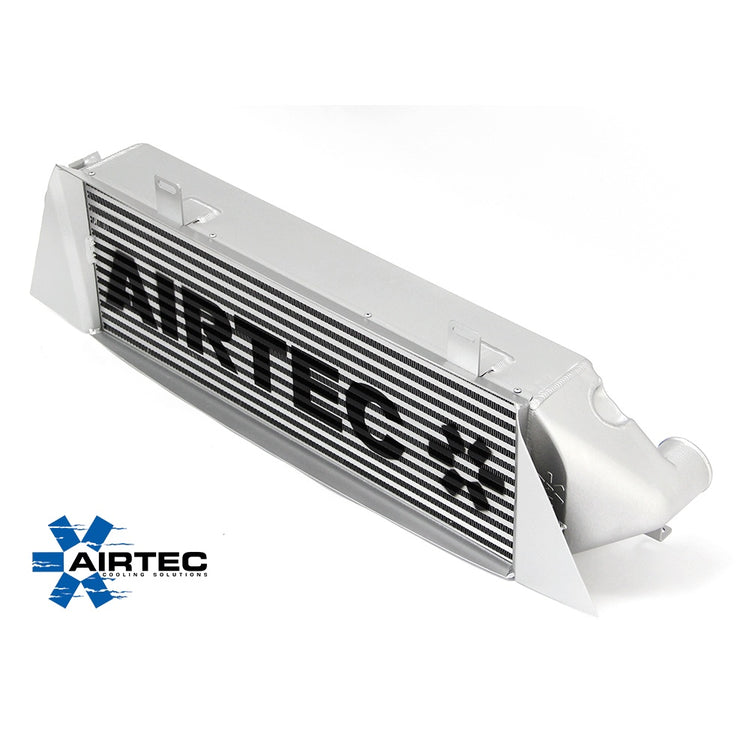
The intercooler upgrade is arguably the most important piece of hardware at this level.
The 2.3 EcoBoost runs hotter than almost any other engine in this class, and the stock intercooler simply can't keep up when you're running higher boost pressures. An upgraded unit keeps intake air temperatures consistent, which means the ECU isn't constantly pulling timing to protect itself.
The result is more power, but just as importantly, consistent power — pull after pull, lap after lap.
The turbo-back exhaust — including a sports catalyst downpipe — removes the most significant exhaust restriction on the car.
The standard downpipe and catalyst are extremely restrictive and create a massive amount of backpressure. Fitting a freer-flowing system allows the twin-scroll turbo to spool faster, breathe more efficiently at the top end, and produce more power across the entire rev range.
It also gives the car a much more purposeful exhaust note — the RS sounds incredible with a proper turbo-back system.
At these power levels, we continue to build temperature protection into the calibration. The additional cooling hardware means the safety strategies kick in far less often, but they're still there as a safety net — particularly important if you're doing extended track sessions in the summer.
- Performance induction kit
- Upgraded intercooler
- Turbo-back exhaust with sports catalyst
- 99 RON fuel — essential at this power level


The Head Gasket StoryWhat actually happened — and what to check
No RS tuning guide would be complete without addressing the head gasket issue. It's the most talked-about topic in the MK3 RS community, and for good reason — but it's also widely misunderstood. Here's what actually happened.
During production, a number of early RS engines (primarily 2016–2017 build dates) were assembled with the wrong head gasket — one intended for the 2.3-litre Mustang EcoBoost engine. While the two engines share the same block architecture, they use different cylinder head designs with different coolant passage layouts. The Mustang gasket has a coolant passage that shouldn't be present on the RS, which caused coolant to stagnate in certain areas of the head. Over repeated heat cycles, this led to localised overheating, cylinder head distortion, and ultimately gasket failure.
The symptoms are unmistakable: white smoke from the exhaust on cold start, dropping coolant levels with no visible leak, misfires, and in severe cases a milky residue on the oil cap. If you see any of these, stop driving the car and have it inspected immediately.
Ford acknowledged the issue and issued a field service action (FSA 17832), offering free inspection and repair for all 2016–2017 model year cars regardless of warranty status. The repair involves a pressure test of the cooling system, replacement of the head gasket with the correct revised part, and inspection of the cylinder head for warping — with a new head fitted if damage is found.
What this means if you're buying or already own an RS: Check the service history for FSA 17832 completion. If the car has had the gasket replaced with the revised part, the issue is resolved — it was a production error, not an inherent design flaw. Post-2017 build cars and any car that's been through the service action are considered sorted. The engine itself is fundamentally sound.
Keeping Your RS HealthyMaintenance tips for tuned 2.3 EcoBoost engines
The 2.3 EcoBoost is a capable and rewarding engine to tune, but it does demand respect — particularly around heat management and maintenance. Here's what matters most.
Fuel: Always run 99 RON — Shell V-Power or Tesco Momentum. This is non-negotiable on a tuned RS. The ECU uses an inferred octane system that actively adjusts timing and boost based on fuel quality. Better fuel means more power, cleaner combustion and significantly reduced LSPI risk. At Stage 2 power levels, 99 RON is essential — the engine simply cannot make safe, consistent power on 95 or 97.
Oil: Use a quality fully synthetic oil and shorten your change intervals to 5,000–7,500 miles on a tuned car. The direct-injection system causes fuel dilution of the oil over time, which contributes to LSPI risk and accelerates bearing wear. Fresh oil is the single cheapest form of insurance on these engines. If you're doing track days, change it immediately afterwards.
Spark plugs: For stock and Stage 1 power levels, the genuine Ford RS spark plugs are perfectly adequate — replace every 15,000–20,000 miles. At Stage 2, we recommend upgrading to NGK Iridium one-step-colder plugs gapped to 0.026" (0.65mm). The colder heat range handles the increased cylinder pressures and temperatures far better, reducing the risk of misfires and pre-ignition under sustained hard use.


Coolant: Monitor your coolant level religiously — especially on pre-2018 cars. A dropping coolant level with no visible leak is the early warning sign of head gasket issues. If you notice the level dropping, get the car inspected before driving it further.
Heat management: This is the single most important thing to understand about the 2.3 EcoBoost. It runs hotter than the 2.0 in the ST, and intake air temperatures climb rapidly under sustained hard use. If you're doing track days, an intercooler upgrade isn't optional — it's essential. Even on the road, avoid back-to-back hard pulls on warm days without giving the engine a chance to breathe. Our calibrations include temperature protection as standard, but helping the hardware manage heat is your responsibility.
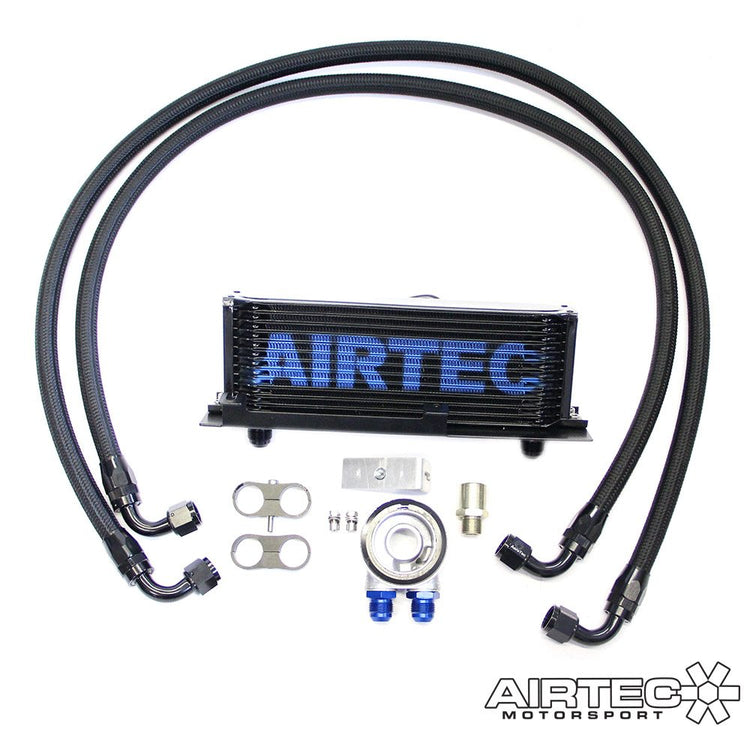
Oil temperatures are just as important as intake temps on the 2.3 — particularly under sustained load on track. The factory oil cooling is marginal at best when you're running higher power levels, and elevated oil temps lead to accelerated wear, reduced lubrication effectiveness and increased LSPI risk. A dedicated oil cooler kit is a worthwhile investment for any RS owner who does track days or spirited driving in warmer months.
Driving habits: The same rules as the ST250 apply, but with even more emphasis. Never go to full boost in high gears at low RPM. The RS makes enough torque to cause serious damage through LSPI if you lug the engine. Drive it hard through the gears — that's what the AWD system and 6-speed box are designed for — but be mechanically sympathetic about how you apply the power.
Service KitsEverything you need to keep your RS in top condition
Keeping on top of servicing is the best thing you can do for the longevity of a tuned 2.3 EcoBoost. We stock genuine Ford service kits that include everything you need for an oil and filter change — saving you the hassle of sourcing individual parts. If you're running a tuned RS, we recommend servicing every 5,000–7,500 miles rather than the factory 12,500-mile interval. Fresh oil is the cheapest insurance you can buy for these engines.

Complete the LookStyling upgrades for the MK3 Focus RS
The RS already looks the part straight out of the factory — the aggressive front bumper, rear spoiler and quad exhaust tips give it a presence that the ST can only dream of. But there's still plenty of room to personalise. Whether it's a more aggressive splitter to sharpen up the front end, side skirt extensions for a lower visual stance, or a rear diffuser to finish off the rear profile, the right styling touches elevate the RS from factory special to something truly individual. A lowered, tuned RS with considered exterior mods is one of the most striking cars on the road.

Quick ReferenceAt-a-glance comparison of each stage
| Stage | Power | Torque | Hardware Required |
|---|---|---|---|
| Stock | 345bhp | 324ft/lb (347 overboost) | — |
| Stage 1 | 370–380bhp | 395–415ft/lb | Induction kit (recommended) |
| Stage 2 | 420–435bhp | 420–430ft/lb | Intake + intercooler + turbo-back exhaust |
*All figures measured on our in-house dyno using 99 RON fuel. Individual results may vary based on vehicle condition, ambient temperature and fuel quality.


