
MK7 Golf R Tuning Guide — EA888 Gen 3 (MQB)
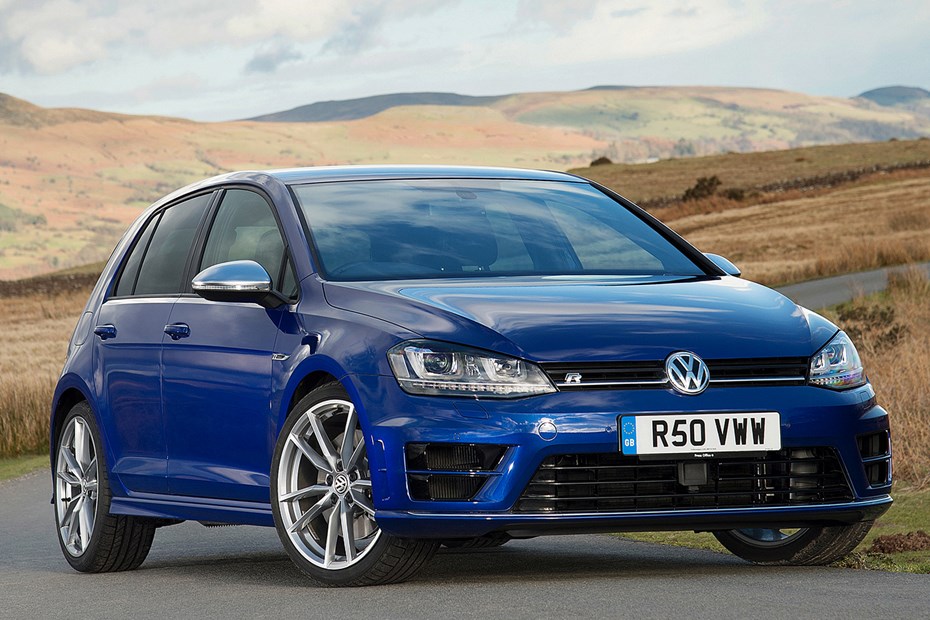
The MK7 Golf R is one of the most tuneable platforms we work with. The 2.0 TSI EA888 Gen 3 engine is a significant step forward over the previous generation — stronger steel rods, a redesigned crankshaft, lightweight balance shafts, and a completely reworked cylinder head all contribute to an engine that responds brilliantly to tuning while staying reliable.
From the factory, the Golf R comes with the IHI IS38 turbocharger and the Siemens SIMOS 18.1 ECU — which gives us an excellent level of control for mapping.
Non-GPF models feature dual-injection (port and direct), while later GPF-equipped models run direct injection only — but even with just the direct injectors, the fuelling is more than capable of supporting over 400hp so it's not a limitation.
Pre-facelift (MK7) models run either a 6-speed DQ250 DSG or 6-speed manual, while facelift (MK7.5) models upgraded the DSG to the stronger 7-speed DQ381.
We've tuned a huge number of Golf Rs on our in-house 4WD DynoDynamics rolling road here in Coventry and know this platform inside out.
This guide walks you through every stage of tuning, what parts you need, the power you can realistically expect, and what to watch out for along the way.
All power figures in this guide are based on real results from our own dyno — not manufacturer claims. For optimal results, 99 RON fuel is required.
Stock Where you're starting from
VW rates the Golf R at 300hp (296hp on pre-facelift). On our dyno, healthy standard cars typically make around 300–310hp. It's an impressive starting point, and it's about to get a lot better.
Stage 1 — Remap Only The biggest single gain you'll ever make
This is where the Golf R really sets itself apart. The factory hardware is so well specced that a Stage 1 remap alone typically unlocks 350–370hp and a very healthy 380–400ft/lb of torque — that's an extra 50–70hp with nothing but 99 RON fuel and calibration.
The gains at this stage are genuinely transformative. The car pulls significantly harder across the entire rev range, and the mid-range torque delivery is where you feel it the most.
On DSG cars, customers consistently report 3.5–3.6 second 0–60 times with just a WP engine and DSG tune.
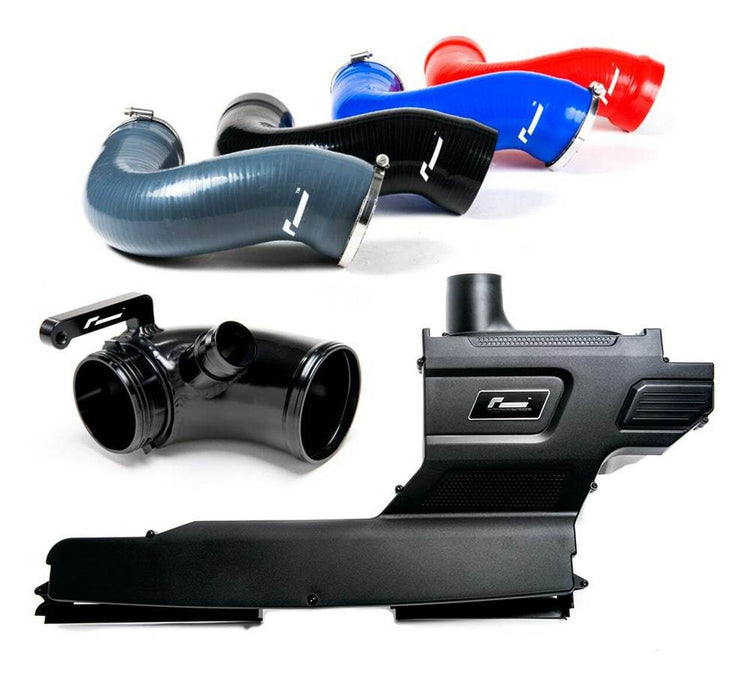
To get the very best from Stage 1, we recommend fitting a Racingline R600 intake system. The R600 is a complete replacement airbox with twin front air intakes and a giant TriFoam filter rated to 600hp — so it's more than enough for anything you'll ever throw at the stock turbo. It's beautifully made too, constructed from the same PU material as the factory airbox and textured to match, so it looks OEM-plus.
For the best value, the Racingline R600 Bundle includes the intake, turbo elbow, and silicone intake pipe all together — everything you need from intake to turbo in one kit.

Stage 2 — Intake + Intercooler + Exhaust + Remap Max out the stock IS38 turbocharger
Stage 2 is about extracting everything the stock IS38 turbocharger can give. To get there, we need to address the two main restrictions holding it back: cooling and exhaust flow.
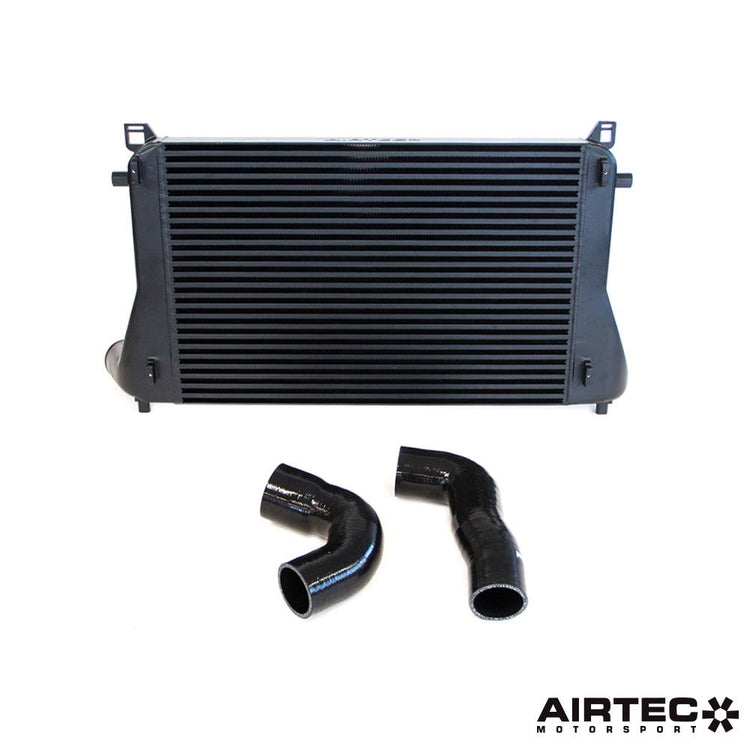
An uprated front-mount intercooler is essential at this point. The stock intercooler heat-soaks quickly under hard use, which costs you power and consistency — especially on warmer days or during back-to-back hard runs.
We recommend either the Airtec or Racingline intercooler — both are a direct replacement with significantly better cooling capacity.
On the exhaust side, a 3" sports catalyst downpipe opens up the exhaust flow and allows the turbo to spool more freely.
Combined with a full cat-back system, the difference in throttle response and top-end pull is significant.
Cobra Sport offer a complete turbo-back system for the Golf R with a range of options — valved or non-valved, resonated or non-resonated, sports cat or decat.
The valved option integrates with factory drive modes so you can keep it quiet in Eco and let it breathe in Race.
With the full hardware package fitted and recalibrated on our dyno, the Golf R will produce up to 410hp and 430ft/lb — the absolute limit of the stock IS38 turbocharger. At this point, the car is seriously, genuinely fast.
- Racingline R600 intake (or R600 Bundle)
- Upgraded front-mount intercooler
- 3" sports catalyst / decat downpipe
- Custom Stage 2 remap


If you'd like the full system there are plenty of options depending on valves, resonators, GPF etc. If you have any questions just fire us an email to Support@Wayside-Performance.co.uk
Browse all MK7 Golf R Exhausts →DSG Tuning The mod that ties everything together
If your Golf R has the DSG gearbox (DQ250 or DQ381), a TCU remap should be considered at every stage of tuning. It's one of the most underrated modifications on the MQB platform — the difference in how the car drives is immediately noticeable.
The standard DSG calibration was designed around the factory 300hp. Once you've increased power significantly, the gearbox doesn't know how to make the most of it.
A DSG remap addresses this completely by dynamically adjusting clutch pressures to match whatever power your engine is producing — meaning one TCU calibration works from Stage 1 right through and beyond.
- Increased clutch clamping pressure (up to 19 bar)
- Significantly faster shift times
- Raised RPM limits
- Improved launch control with more boost at launch
- True full manual mode — no auto-upshift, no unwanted kickdowns
The difference in acceleration through the gears is dramatic — it turns the DSG from a good gearbox into an exceptional one. We strongly recommend DSG tuning alongside every engine tune.
We offer our own custom DSG tuning or the extremely popular Racingline OEM+ TCU Software:

Supporting Modifications Chassis & handling
Lowering Springs — The standard Golf R sits a little high from the factory. A set of Racingline sport springs will drop the car by around 20–25mm, significantly reducing body roll and improving turn-in.
The ride quality remains perfectly liveable for daily use while feeling noticeably sharper and more planted — exactly what you want once the power has increased.
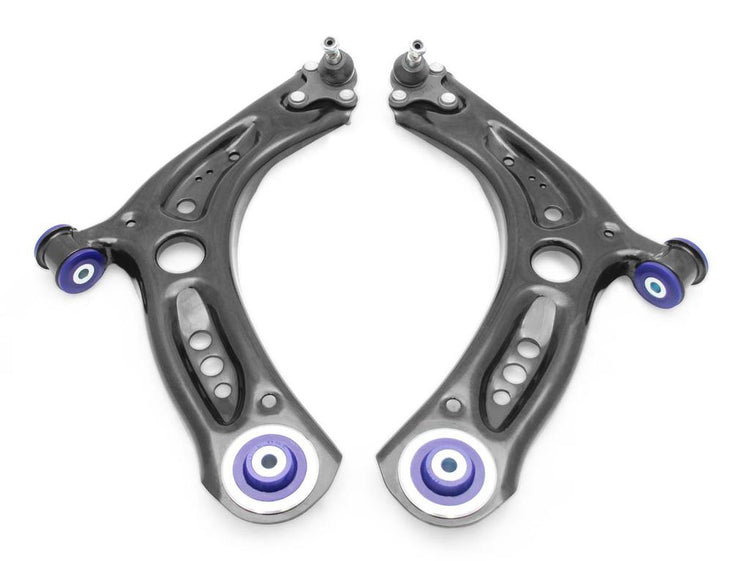
Lower Control Arms — If you're lowering the car or just want sharper steering response and better geometry, the SuperPro TRC1070 lower control arm kit is a brilliant upgrade.
These are a complete replacement for the factory arms, with uprated SuperPro polyurethane bushings and improved ball joints pre-fitted. They eliminate the sloppiness of the standard rubber bushes and maintain proper steering geometry under hard driving.

A Note on the IS38 Turbocharger What to watch for on early cars
The IHI IS38 has been through a number of revisions, and it's fair to say the early turbos had some issues. There are two main failure modes to be aware of.
The first is the electronic wastegate actuator seizing — a well-documented issue on early-revision IS38s (particularly 2014–2016 cars) that triggers EPC lights and limp mode. This happens on completely standard cars too, so it's not necessarily a tuning-related failure.
The second is complete turbo failure. The IS38 uses a zero-clearance compressor design, which is great for efficiency but means even minor bearing wear can allow the compressor wheel to contact the housing — and once that happens, the turbo is done.
Later revisions (part number 06K145722H onwards, fitted from roughly 2017 including all MK7.5 models) are significantly more reliable and addressed both issues. If you're buying a pre-facelift car, check the turbo's condition and revision before committing to modifications — and if it needs replacing, always fit the latest revision unit.
Complete the Look Styling upgrades to match the performance
Once the performance is sorted, it's worth finishing the car off with some styling upgrades to match. We stock a full range of splitters, side skirts, spoiler extensions, and diffusers for the MK7 Golf R — all designed to give the car a more aggressive look without going over the top.
Browse all MK7 Golf R Styling Parts →Quick Reference Power by stage
| Stage | Mods Required | Power | Torque |
|---|---|---|---|
| Stock | None | ~300–310hp | ~280–290ft/lb |
| Stage 1 | Remap (+ intake recommended) | 350–370hp | 380–400ft/lb |
| Stage 2 | Intercooler + exhaust + intake + remap | 385–410hp | up to 430ft/lb |
All figures based on real dyno results at Wayside Performance, Coventry. Individual results may vary depending on the condition of the car, fuel quality, and ambient conditions. 99 RON fuel required.
Ready to Get Started?
Whether you're after a simple Stage 1 remap or planning a full Stage 2 build to max out the IS38, we'd love to help. All of our tuning is completely custom and carried out on our in-house 4WD rolling road in Coventry — no generic off-the-shelf maps. Every car gets a before and after dyno printout.
Got questions? Drop us a message on the live chat or email us at Support@Wayside-Performance.co.uk


