
MK3 Focus ST250 Tuning Guide — Stage 1 & Stage 2 | Wayside Performance

The MK3 Focus ST — widely known as the ST250 — is one of the best-selling performance Fords of the modern era. Produced from 2012 to 2018 in both pre-facelift and facelift guise, it pairs a 2.0-litre turbocharged EcoBoost engine with Ford's proven MMT6 six-speed manual gearbox.
With 250PS and 360Nm from the factory, it's a quick car in standard trim — but the tuning headroom is enormous.
The engine uses a BorgWarner K03 turbocharger with an integrated exhaust manifold cast directly into the cylinder head — Ford's "headifold" design. This packaging is clever for emissions and spool, but it becomes a significant flow restriction as power levels climb.
It produces excellent low-down torque, but top-end breathing is limited by the manifold design. That said, a well-mapped Stage 1 or Stage 2 ST250 is one of the best bang-for-buck hot hatches you can buy.
This guide covers the two most popular stages of tune for the standard-turbo ST250, with our recommended hardware at each level.
Every remap is a custom dyno calibration carried out on our in-house rolling road.
Stock PerformanceFactory baseline — 250PS / 360Nm
From the factory the ST250 makes around 247bhp and 265ft/lb of torque, with peak boost sitting at approximately 20psi. The BorgWarner K03 turbo spools quickly and delivers a broad, flat torque curve — you feel the shove from around 2,000rpm right through to the redline.
The integrated exhaust manifold "headifold" design helps with spool speed and packaging, but it's a restriction when you start pushing for more top-end power.
The stock intercooler is undersized and heatsoak is a real issue — even on a standard car you'll see power drop off noticeably after repeated hard pulls.
The active grille shutters fitted from the factory further restrict airflow to the intercooler. Ford fitted them for fuel economy reasons, but they serve no useful purpose on a performance car.
Stage 1 — 270–280bhpRemap only — no hardware required
A Stage 1 remap is the single best modification you can make to the ST250. With nothing more than a custom ECU calibration, you'll see gains of around 25–30bhp and a significant uplift in mid-range torque.
The car transforms — the flat spot through the mid-range is cleaned up, throttle response sharpens, and the whole powerband feels more alive.
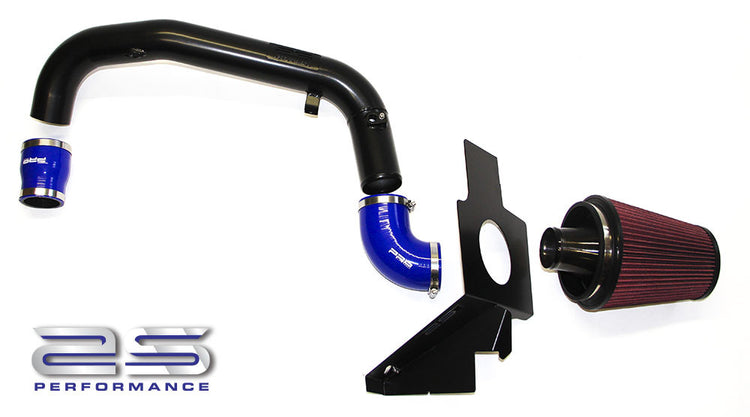
No hardware modifications are required at this stage. The standard exhaust, intercooler and intake will all cope with Stage 1 power levels. That said, we do recommend fitting an Airtec induction kit — it's not essential, but it improves airflow, gives the turbo a slightly easier time and sounds fantastic. It's a worthwhile addition if you're already having the car in for a remap.
- Custom ECU calibration on our in-house rolling road
- Optimised boost, fuelling and ignition timing
- Before & after dyno printout
- Airtec induction kit — improved airflow and turbo intake sound (recommended but not required)

Stage 2 — 290–305bhpIntake + intercooler + turbo-back exhaust required
Stage 2 is where the ST250 really comes alive.
With the intake, intercooler and exhaust restrictions removed, the K03 turbo can breathe properly and the remap can take full advantage.
You're looking at around 290–305bhp depending on the condition of the car and quality of fuel — that's a genuine 50+ bhp over stock, and the torque increase is transformative.
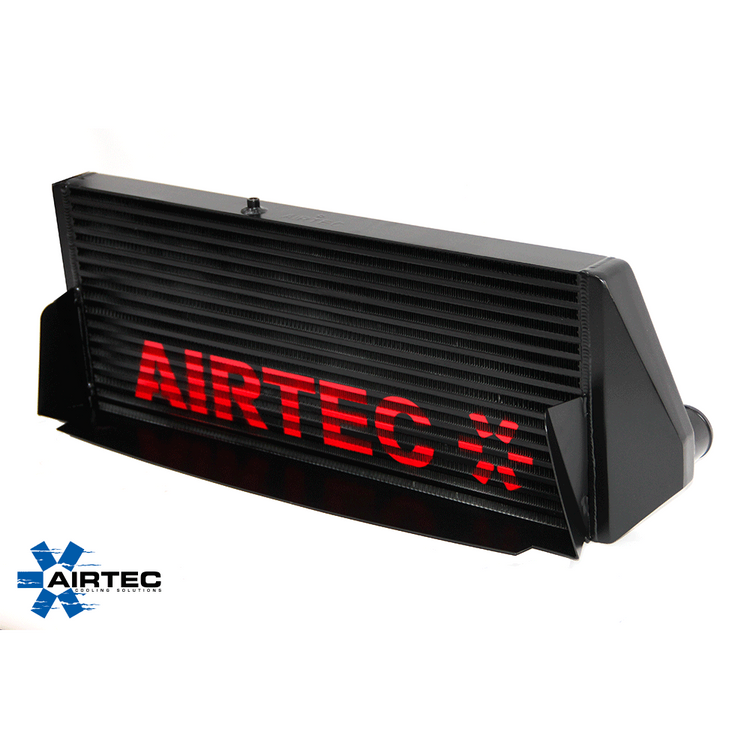
The intercooler upgrade is critical at this stage. The stock intercooler simply cannot cope with the increased heat from higher boost levels — you'll see massive intake temperature creep and the ECU will pull timing to protect itself, costing you the power you've just paid for.
An Airtec intercooler drops intake temps to within a few degrees of ambient and keeps them there, pull after pull.
The turbo-back exhaust is equally important. Remember, the K03 turbo is already fighting the restrictive headifold design — the last thing it needs is a small-bore standard exhaust choking the outlet side as well.
A Cobra turbo-back system with a sports cat opens up the exhaust flow dramatically, improves spool and gives the car a proper voice.
A sports cat will pass an MOT emissions test; a decat downpipe is for motorsport use only.
- Airtec induction kit — full cold-air intake replacing the restrictive OEM airbox
- Airtec front-mount intercooler — eliminates heatsoak, consistent power pull after pull
- Cobra turbo-back exhaust — 3" downpipe with sports cat and cat-back system
- Active grille shutter delete — remove the OEM shutters to maximise airflow to the new intercooler
- One-step-colder spark plugs — gapped to 0.026" (0.65mm) for higher boost reliability
- Quality oil on a shortened service interval — 5,000–7,500 mile changes with a quality fully synthetic



Worthwhile UpgradesRecommended supporting mods for any tuned ST250
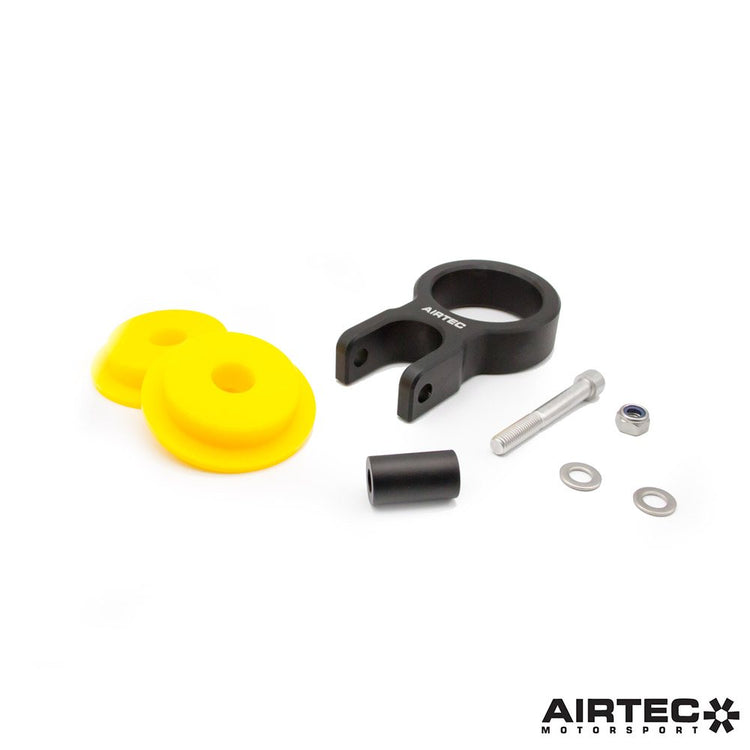
Lower engine mount: The stock rubber lower engine / gearbox torque mount is soft by design for NVH refinement, but on a tuned car it allows excessive engine movement under hard acceleration — causing wheel hop and vague gear shifts.
A polyurethane replacement tightens everything up noticeably. The yellow bush is perfect for fast road use; purple for track. It's a 30-minute DIY job and one of the best value mods you can do on this platform.
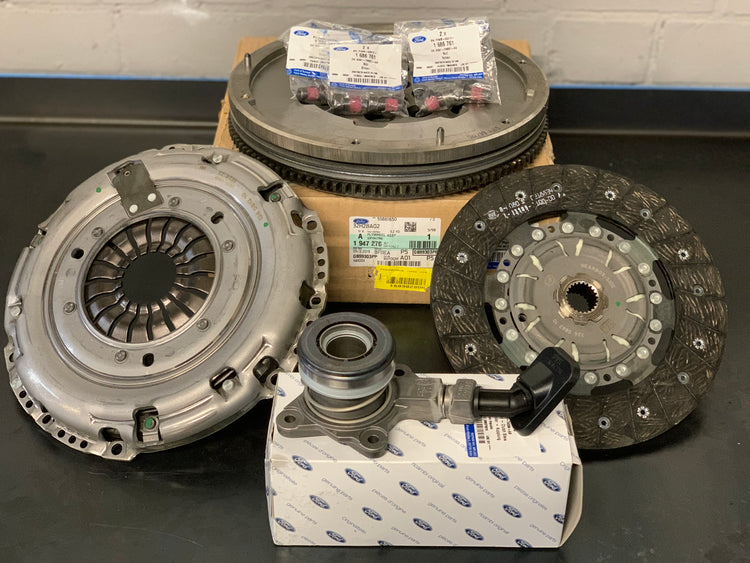
Clutch upgrade: The ST250's stock clutch was perfectly adequate at 250PS, but many higher-mileage tuned cars are slipping nowadays — especially at Stage 2 torque levels.
The MK3 Focus RS clutch kit is the best upgrade option: it's a direct bolt-on fit, far stronger than the ST item, and — crucially — it maintains OEM pedal feel.
No heavy clutch pedal, no chatter, just a lot more holding capacity. It includes the dual-mass flywheel, clutch plate, cover, slave cylinder and flywheel bolts.
Improving the HandlingGetting the chassis to match the engine
The MK3 ST's chassis is one of its strongest assets but the factory setup is still a compromise between showroom ride quality and performance.
Once you've added power, the standard suspension starts to show its limits: more body roll through fast direction changes, a nose-heavy feel on corner entry, and the rear inside wheel lifting under hard cornering.
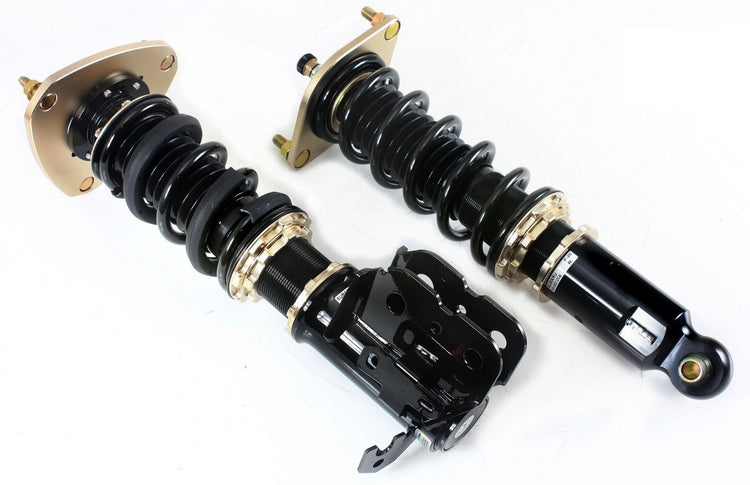
A quality set of coilovers transforms the car. You get full height adjustment to dial in the stance you want, adjustable damping so you can soften things for the commute and firm up for a track day, and a significant reduction in body roll.
The lower centre of gravity and stiffer spring rates sharpen up turn-in and give you far more confidence to use the extra power on the way out of corners. If you're ever planning a track day or just want the car to feel properly tied down on a B-road, coilovers are the single biggest improvement you can make to how the ST drives.
Complete the LookStyling upgrades for the MK3 ST250
Half the fun of owning an ST is making it yours. Whether it's a subtle splitter and spoiler extension to sharpen up the front and rear profile, or a full Maxton Design kit to give it real presence, the MK3 ST has a huge range of styling options available.
A lowered, tuned ST with the right exterior touches is one of the best-looking hot hatches on the road — and a well-chosen bodykit complements the coilovers and performance upgrades perfectly.

Keeping Your ST250 HealthyMaintenance tips for tuned EcoBoost engines
The 2.0 EcoBoost is a solid engine with a proven track record across millions of Ford, Volvo and Jaguar applications. The block is derived from the Mazda L-series — a closed-deck design that's actually considered stronger than the 2.3-litre open-deck block used in the Focus RS. That said, like any turbocharged direct-injection engine, it benefits from proper care — especially when tuned.
Fuel: Always run 99 RON fuel — Shell V-Power, Tesco Momentum or BP Ultimate. The ECU uses an inferred octane system that will actively adjust timing and boost based on fuel quality. Better fuel means more power, cleaner combustion and significantly reduced LSPI risk.
Oil: Use a quality fully synthetic oil and shorten your change intervals to 5,000–7,500 miles on a tuned car. The direct-injection system causes fuel dilution of the oil over time, which contributes to LSPI. Fresh oil is cheap insurance.
Spark plugs: Consider plugs a maintenance item on a tuned EcoBoost — replace every 15,000–20,000 miles. One-step-colder plugs gapped to 0.026" (0.65mm) are a sensible upgrade at Stage 2. Worn or fouled plugs cause misfires, which contribute to carbon buildup and increase LSPI risk.
Driving habits: The single most important thing you can do to protect the engine is avoid going to full boost in high gears at low RPM. If you've been cruising at 70mph in 6th and need to overtake, drop to 3rd or 4th and build boost progressively.
Going wide-open throttle at 2,000rpm in 6th gear is the textbook recipe for LSPI and ringland failure. Drive the car hard through the gears — that's what it's designed for — but be mechanically sympathetic about how you load the engine.
Timing chain: The 2.0 EcoBoost runs a timing chain rather than a belt, so there's no fixed replacement interval. That said, chains do stretch over time — listen for a rattle on cold start and address it if it appears. Regular oil changes keep the chain tensioner happy.
Quick ReferenceAt-a-glance comparison of each stage
| Stage | Power | Torque | Hardware Required |
|---|---|---|---|
| Stock | ~247bhp | ~265ft/lb | — |
| Stage 1 | 270–280bhp | 300–320ft/lb | Remap only (intake advised) |
| Stage 2 | 290–305bhp | 340–360ft/lb | Airtec intake + Airtec intercooler + Cobra turbo-back + remap |
Ready to unlock your ST250's potential?
All figures are measured at the flywheel on our in-house Dyno Dynamics rolling road and represent typical results on a healthy engine running 99 RON fuel. Individual results may vary depending on vehicle condition, ambient temperature and fuel quality.


