
Astra J VXR Tuning Guide | Stage 1, 2 & 3 | 2.0T A20NFT | Wayside Performance

The Platform What you're working with
The Astra J VXR (also known as the GTC VXR) was produced from 2012 to 2019 and remains one of the best-value performance cars on the used market. Under the bonnet sits the A20NFT — a 2.0-litre all-aluminium, direct-injection turbocharged four-cylinder producing 276hp and 295lb ft from the factory. That's a significant amount of torque for a 2.0-litre engine, and it's one of the things that makes the J VXR such a strong platform to build on. It's fed by a twin-scroll turbocharger running around 20psi of boost and backed by the F40 six-speed gearbox.
The A20NFT is a genuinely strong engine. It responds extremely well to tuning and has plenty of headroom on the stock turbo before you need to start thinking about hybrid or aftermarket turbo options. We are specialists in tuning the A20NFT and its ECU — we've mapped hundreds of these cars over the years and have a massive amount of experience getting the best out of them safely and reliably.
Factory-standard cars do vary — we've seen bone-stock examples roll onto the dyno anywhere from 265hp to 285hp — so the gains you see will depend partly on how strong your particular engine is out of the box. All our figures are based on running 99 RON fuel (Tesco Momentum or Shell V-Power).
Shopping for upgrades? Browse our complete range of Vauxhall Astra J VXR performance parts.
Stage 1 ECU remap — no hardware required
Stage 1 is a straight ECU remap with no hardware changes required. We optimise boost pressure, air-fuel ratios, and ignition timing to safely extract significantly more power and torque from the stock turbo. The A20NFT responds brilliantly to a remap alone — you're looking at gains of around 30–45hp and a substantial jump in mid-range torque that transforms the way the car drives.
No hardware is mandatory at this stage, but we'd always recommend fitting uprated spark plugs and the Airtec induction kit to get the best performance from a Stage 1 tune. The stock airbox is adequate but the Airtec kit gives the turbo a much freer path to draw air and sets you up nicely for Stage 2 down the line. The stock recirculation valve is also worth addressing early — more on that in the supporting mods section below.
- ECU remap — custom rolling road calibration
- Uprated spark plugs — recommended at any power level above stock
- Induction kit — improved airflow over the stock airbox (recommended)


Stage 2 Intake + exhaust + remap
At Stage 2, we start opening up the intake and exhaust to let the engine breathe more freely. The standard airbox is restrictive at higher boost levels, and the factory exhaust system with its catalytic converters creates significant back-pressure that limits what the turbo can do.
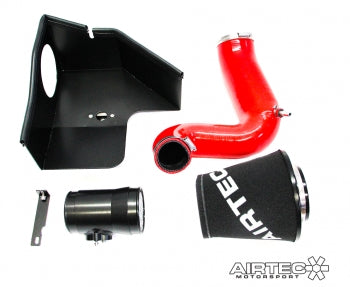
Induction kit: Replacing the stock airbox with a proper induction kit gives the turbo a much freer path to draw air. The Airtec kit uses a large cone filter mounted with a heat shield to keep intake temperatures down — this is a noticeable improvement on this platform and one we'd always recommend before pushing beyond Stage 1 power levels.
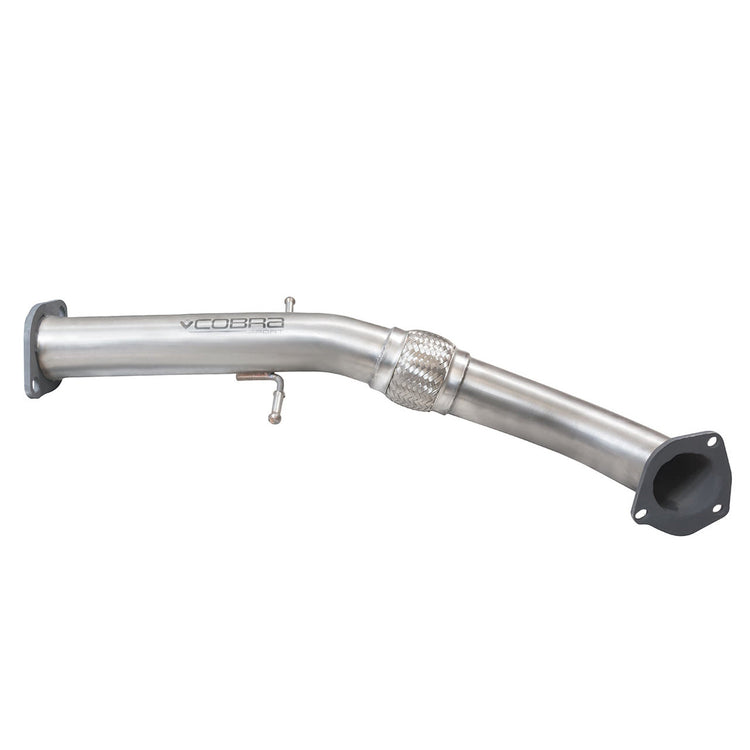
Exhaust — the sensible route: The most effective and road-legal approach is a 3" primary sports cat downpipe combined with a secondary decat pipe. This combination removes the most restrictive part of the exhaust system while keeping a catalytic converter in place for the primary position. This setup passes MOT emissions testing and gives you the vast majority of the flow improvement you'd get from a full decat — without the legal headaches.
For those who want the complete exhaust upgrade, a 3" turbo-back system replaces everything from the turbo to the rear of the car. The Cobra Sport turbo-back includes a sports cat, so it's still road-legal and MOT compliant — but you get the benefit of a full 3" system throughout, a much more aggressive exhaust note, and the convenience of upgrading everything in one go.
- Induction kit — free-flowing intake with heat shield
- 3" primary sports cat downpipe — removes the main restriction while retaining a cat
- Secondary decat pipe — completes the exhaust flow improvement
- ECU remap — re-calibrated on the rolling road to suit the new hardware



Stage 3 Front-mount intercooler + Stage 2 hardware
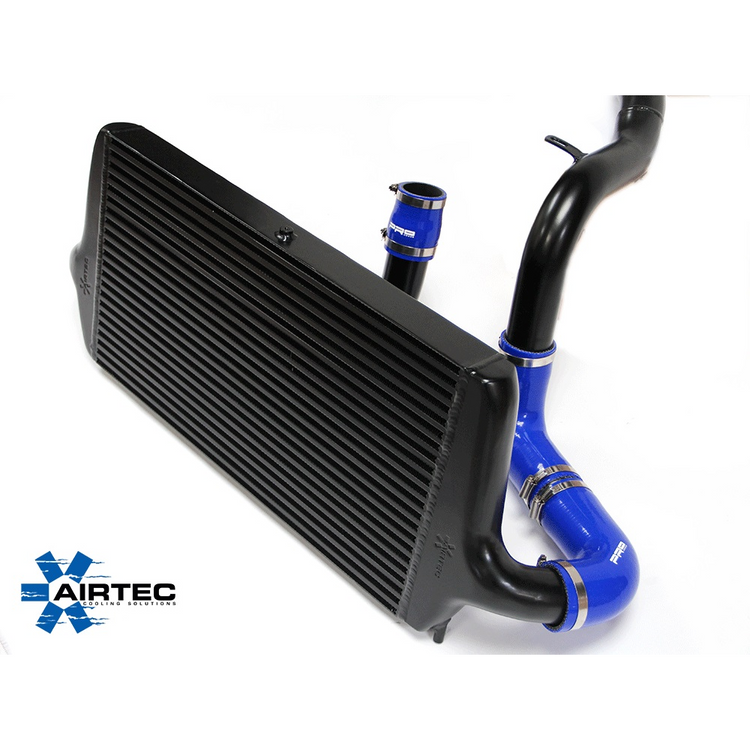
Stage 3 builds on the Stage 2 hardware with the addition of a front-mount intercooler (FMIC). At this point, we're pushing the stock turbo harder and the standard intercooler simply can't keep intake temperatures under control — especially in warmer weather, on track, or during repeated hard pulls.
A properly sized front-mount intercooler makes a dramatic difference to consistency. Where a Stage 2 car might start to lose power after two or three hard runs in quick succession, a Stage 3 car with a good FMIC will hold its power much more reliably. The cooler intake temperatures also allow us to run more aggressive ignition timing, which is where the extra power comes from.
This is the limit of what the stock turbo can comfortably deliver. Beyond this, you're looking at hybrid turbo or aftermarket turbo conversions — a different conversation entirely.
- Front-mount intercooler — dramatically lower intake temperatures
- All Stage 2 hardware — intake, exhaust, and supporting mods
- ECU remap — re-calibrated to take full advantage of the improved cooling

Supporting Mods Reliability & maintenance
These aren't about chasing bigger numbers on the dyno — they're about keeping the car running properly and reliably as you increase the power. We'd consider these essential modifications for any tuned Astra J VXR.
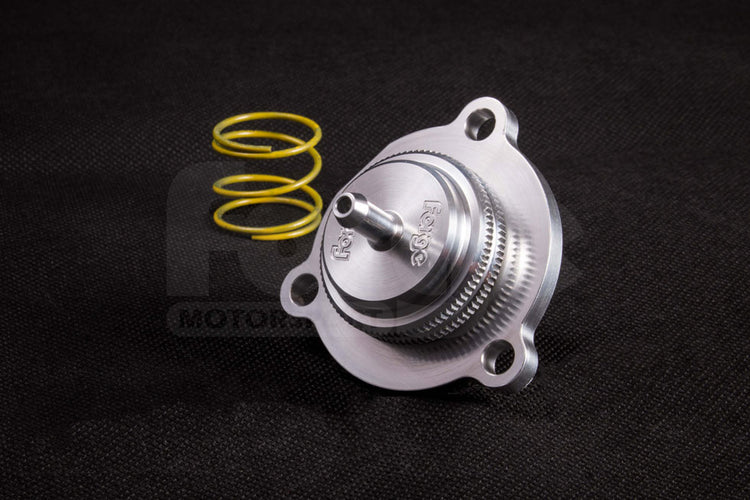
Recirculation Valve — The factory recirculation valve uses a rubber diaphragm that deteriorates over time and can split, especially under the increased boost pressure of a remapped car. When it fails, you'll lose boost pressure and the car will feel down on power. The Forge replacement uses a piston design that's far more durable and gives a more positive seal. We'd recommend fitting this as part of any Stage 1 remap — it's a cheap and easy upgrade that prevents a common and annoying failure point.
Complete the Look Styling upgrades
Once the performance is sorted, it's worth finishing the car off with some styling upgrades to match. We stock a full range of splitters, side skirts, spoiler extensions, and diffusers for the Astra J VXR — all designed to give the car a more aggressive look without going over the top.
Browse all Astra J VXR Styling Parts →
Quick Reference Power by stage
| Stage | Mods Required | Power | Torque |
|---|---|---|---|
| Stock | None | 276hp | 295ft/lb |
| Stage 1 | Remap only | 305–320hp | 365–385ft/lb |
| Stage 2 | Intake + sports cat + secondary decat + remap | 320–335hp | 380–415ft/lb |
| Stage 3 | Stage 2 + front-mount intercooler + remap | 335–345hp | 390–420ft/lb |
All figures based on real dyno results at Wayside Performance, Coventry. Individual results may vary depending on the condition of the car, fuel quality, and ambient conditions. 99 RON fuel required.
Ready to Get Started?
Whether you're after a simple Stage 1 remap or planning a full Stage 3 build, we'd love to help. We're one of the most experienced A20NFT tuners in the country — all of our tuning is completely custom and carried out on our in-house 4WD rolling road in Coventry. No generic off-the-shelf maps. Every car gets a before and after dyno printout so you can see exactly what you've gained.
Got questions? Drop us a message on the live chat or email us at Support@Wayside-Performance.co.uk


